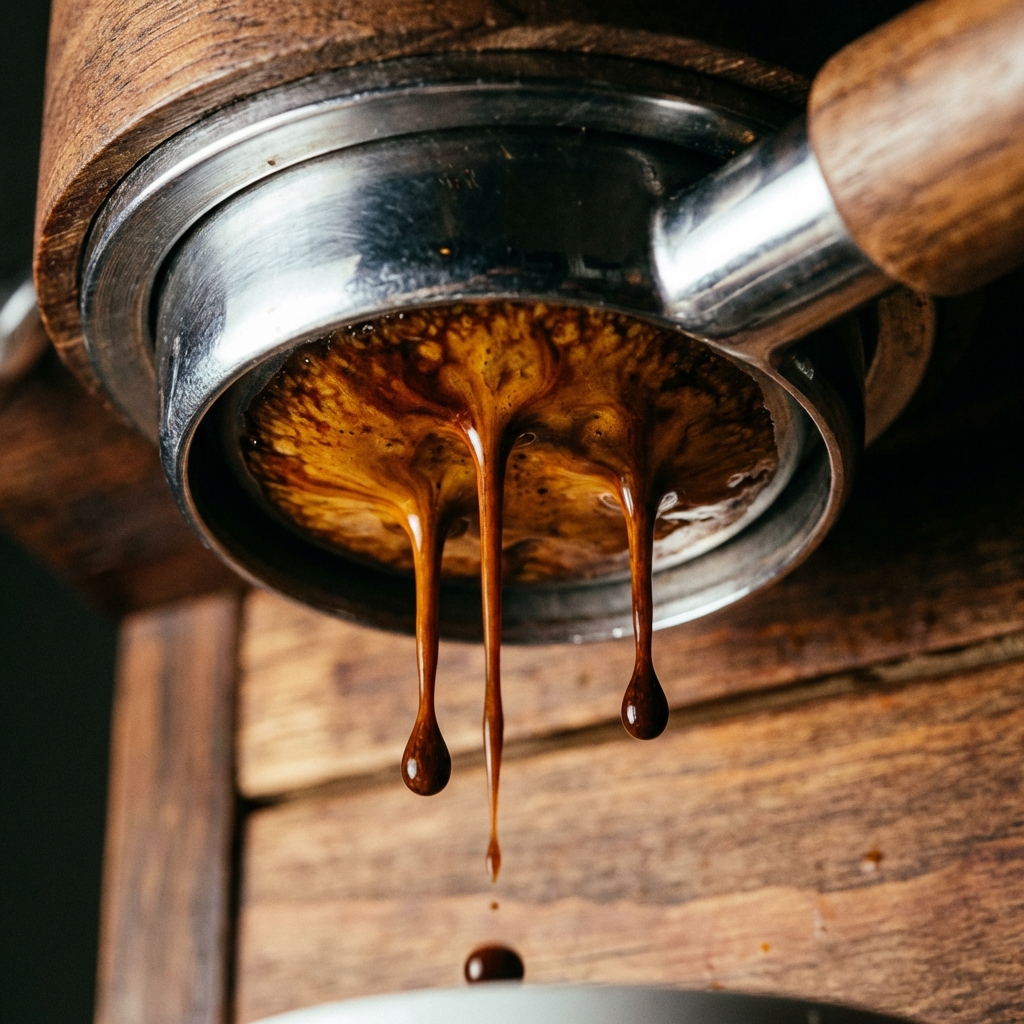
If you blast a dry, fragile puck of coffee with 9 bars of pressure (about 130 PSI) instantly, what happens? It breaks. This breakage creates cracks called "channels." Water rushes through the cracks, over-extracting them (bitter) while ignoring the rest of the puck (sour).
The Solution: Gently Does It
Pre-infusion is the process of gently saturating the coffee puck with water at low or zero pressure before ramping up to full extraction pressure.
Think of it like watering dry soil. If you dump a bucket on it, the water runs off the surface. If you mist it first, the soil expands and becomes ready to absorb the flow.
Why Pre-Infusion Changes the Game
- Repairs Puck Prep Errors: As the grounds get wet, they swell. This swelling heals small cracks and gaps in your tamp, creating a unified, strong puck.
- Allows Finer Grinding: Because the puck is more stable, it won't shatter under pressure. This means you can grind finer to extract more sweetness without choking the machine.
- Reduces Channeling: The number one cause of bad espresso is channeling. Pre-infusion is the number one fix.
How to Pre-Infuse (Even on Cheap Machines)
1. The "Real" Deal (E61 / Flow Control)
If you have an E61 machine or a Breville Dual Boiler, you likely have programmable pre-infusion. Set it to 2-4 bars for 5-10 seconds. Watch for the first drops to appear on the bottom of the basket, then engage full pressure.
2. The "Poor Man's" Pre-Infusion (Breville/Sage)
On machines like the Bambino or Barista Express, holding down the shot button manually keeps the machine in "pre-infusion mode" (low pressure). Hold it for 5-8 seconds, then let go to ramp up.
3. The Steam Wand Trick (Gaggia Classic)
On older single boilers without 3-way valves: Open the steam wand slightly while hitting the brew button. This bleeds off pressure, sending only a trickle of water to the group head. Close the steam wand after 5 seconds to go to full pressure.
Try a "Blooming" Shot
Want to get crazy? Try a long pre-infusion (30 seconds!) where you saturate the puck and then turn the pump off completely. Let it sit and "bloom" like a pour-over. Then hit it with pressure. This pulls incredible fruit notes out of light roasts.