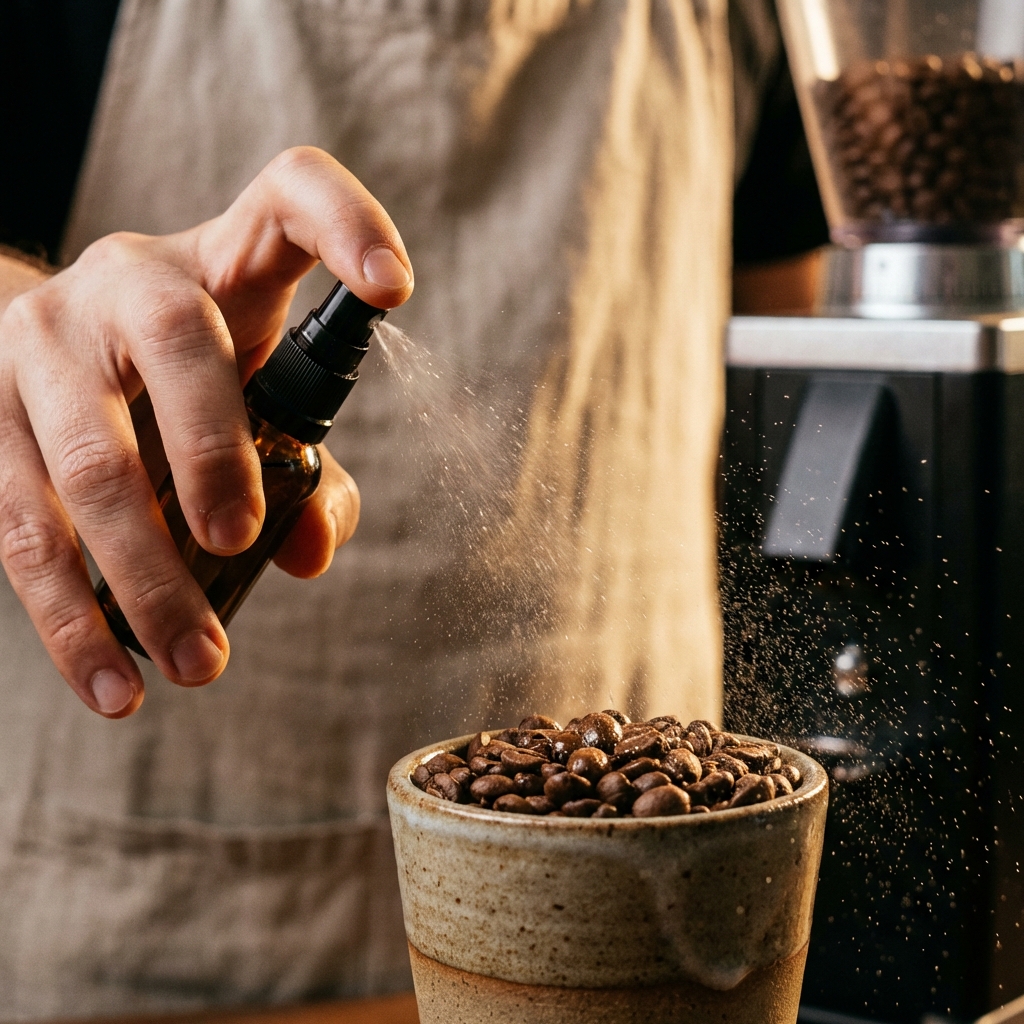
It sounds counter-intuitive: Water destroys grinders, right? So why are baristas everywhere spraying water directly onto their beans before grinding? Welcome to the magic of the Ross Droplet Technique (RDT). It is the simplest, cheapest, and most effective hack for a better espresso workflow.
The Problem: Static Electricity
When you grind dry coffee beans at high speed, friction generates a massive amount of static electricity. This static charge causes coffee grounds to cling to everything—the grinder chute, the dosing cup, and even fly off sideways onto your counter.
This clinging is called retention. If you put 18g in and get 17.5g out, that 0.5g is stuck in your grinder, going stale, waiting to fall into your next shot and ruin it.
The Solution: One Drop of Water
The Ross Droplet Technique (named after David Ross) is laughably simple. You add a tiny amount of moisture to the beans before grinding.
How To Do It
- Weigh your single dose of beans.
- Take a small spray bottle filled with water.
- Give the beans one single spray (about 0.1ml).
- Shake the dosing cup to distribute the moisture.
- Grind immediately.
Don't have a spray bottle? dampen the handle of a spoon and stir the beans.
Why It Works
Water is conductive. Adding surface moisture allows the static charge to dissipate rather than building up on the grounds. The result?
- Zero Retention: 18g in, 18g out.
- No Mess: Grounds fall straight down into the portafilter like sand, not sticky dust.
- Less Clumping: Static causes clumps; removing static gives you fluffier grounds.
Is It Safe?
Yes. The amount of water (a droplet) is so negligible that it evaporates almost instantly due to the heat of grinding. It will not rust your burrs unless you soak them or leave wet beans sitting in the hopper for days (don't do that).
Note: Some manufacturers of high-carbon steel burrs warn against it, but thousands of enthusiasts do it daily without issue. If you're worried, use less water.