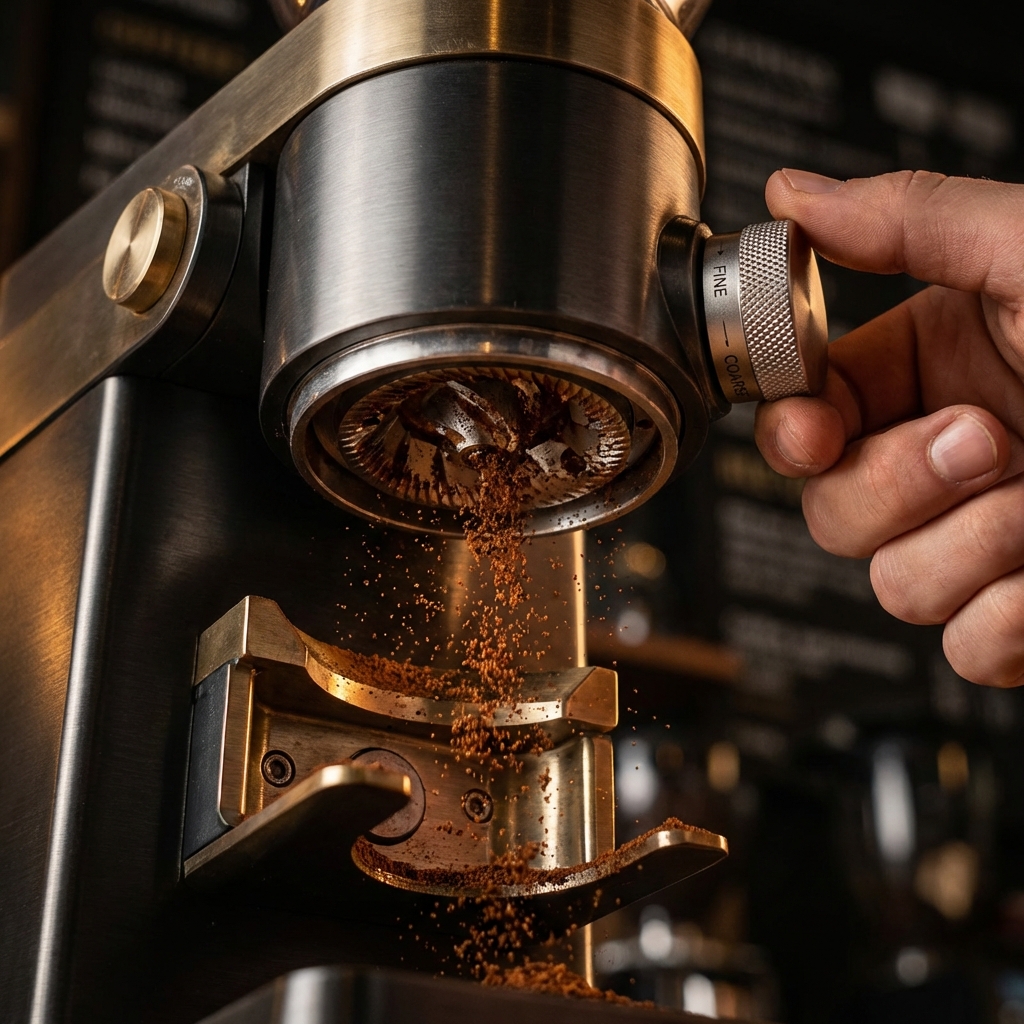
If you could master only one espresso variable, make it grind size. This single adjustment has more impact on your shot quality than any other factor. Understanding how to read your shot and make precise grind changes is the difference between frustration and consistently great espresso.
Why Grind Size Matters So Much
Think of ground coffee like rocks in a riverbed. Coarse grind = big rocks = water flows freely. Fine grind = tiny pebbles = water struggles to pass.
Grind size directly controls:
- Flow rate: How fast water moves through the puck
- Contact time: How long water interacts with coffee
- Surface area: How much coffee is exposed to water
- Extraction level: How much flavor is dissolved
A tiny change in grind can shift extraction time by 5-10 seconds and completely transform flavor.
The Diagnostic Framework
Use these symptoms to guide your adjustments:
How to Make Adjustments
1. Change Only Grind Size
When dialling in, keep dose and yield constant. If you change multiple variables at once, you won't know what fixed the problem.
2. Make Small Adjustments
Espresso grinders are precision instruments. One "click" or a quarter-turn can change shot time by several seconds. Start smaller than you think necessary.
3. Purge After Adjusting
After changing your grind setting, grind and discard 2-4 grams of coffee. This clears the old grind size from the burrs and chute, ensuring your next shot reflects the new setting.
Adjust While Grinding
For most grinders, it's safer to adjust while the burrs are spinning. This prevents jamming and ensures the new setting engages smoothly.
Visual Cues for Grind Problems
Signs You're Too Coarse:
- Shot gushes out immediately (under 15 seconds)
- Pale, watery stream with little crema
- Sour, thin, acidic taste
- Puck is wet and soupy after extraction
Signs You're Too Fine:
- Shot drips slowly or chokes completely
- Dark, thick stream that barely flows
- Bitter, harsh, astringent taste
- Puck is dry but shot took 40+ seconds
Environmental Factors
Your grind setting isn't "set and forget." External factors require daily adjustment:
Humidity
High humidity causes coffee to absorb moisture, grinding coarser than intended. Low humidity makes beans drier and grind effectively finer. Adjust accordingly.
Temperature
Grinder burrs heat up with use. Hot burrs can cause coffee to grind finer over time. You may need to coarsen slightly during busy sessions.
Bean Age
Fresh beans (3-7 days) contain more CO2 and flow faster. Older beans (14-30 days) are denser and flow slower. Expect to grind slightly finer as beans age.
Grinder-Specific Notes
Different grinder types behave differently:
- Stepped grinders: Fixed positions. Move one step at a time. Some have "micro-steps" for finer control.
- Stepless grinders: Infinite adjustment. Make tiny rotations�a quarter turn can be significant.
- Hand grinders: Often stepless. Count rotation degrees for repeatability.
Key Takeaways
- Grind size is the #1 variable for controlling espresso extraction
- Finer grind = slower flow = more extraction
- Coarser grind = faster flow = less extraction
- Make small adjustments and purge after each change
- Environmental factors require daily tweaks
- Learn your grinder's behavior for consistent results