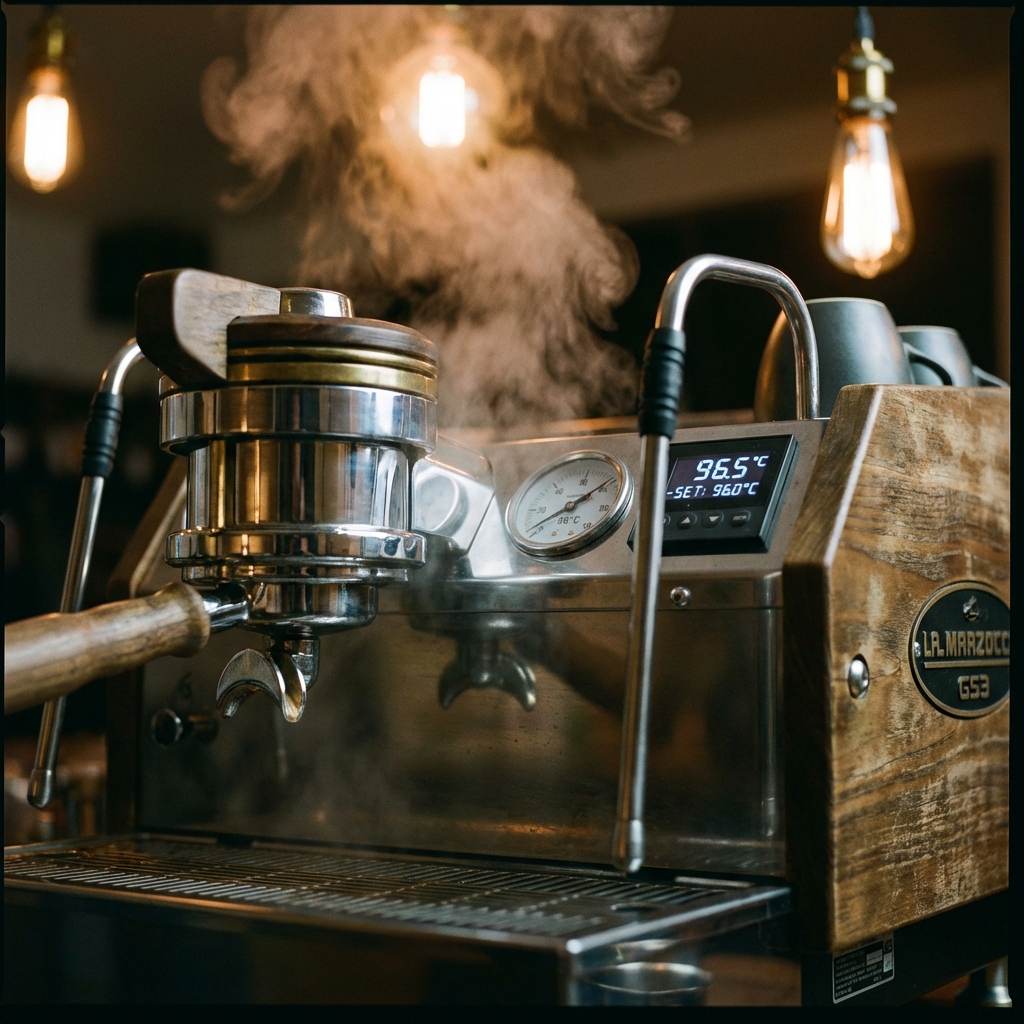
Water temperature is one of the most powerful yet underutilized tools in espresso brewing. While most home baristas focus on grind and dose, temperature adjustments can unlock entirely new flavor dimensions from the same coffee�without changing anything else.
How Temperature Affects Extraction
Different flavor compounds dissolve at different rates depending on temperature:
- Acids: Extract first and at lower temperatures. These provide brightness and fruitiness.
- Sugars: Extract in the middle range. These contribute sweetness and body.
- Bitter compounds: Extract last and at higher temperatures. These can overwhelm other flavors if over-extracted.
This extraction hierarchy means temperature directly influences your flavor balance. Higher temps pull more of everything faster; lower temps slow things down and favor early-extracting compounds.
The Standard Range
The Specialty Coffee Association recommends brewing water between 92�C and 96�C (197�F to 205�F). Most machines default to around 93-94�C, which works well for medium roasts.
Temperature for Different Roasts
Light Roasts: Go Hotter (94-96�C)
Light roasts are denser and harder to extract. Their complex acids and sugars need higher temperatures to fully dissolve. Lower temps often result in sour, underdeveloped shots.
At higher temperatures, you'll unlock:
- More sweetness and developed sugars
- Better balance between acidity and body
- Cleaner, more transparent fruit notes
Medium Roasts: The Sweet Spot (92-94�C)
Most machines are calibrated for medium roasts. The default 93�C usually works beautifully, providing balanced extraction across the flavor spectrum.
Dark Roasts: Go Cooler (88-91�C)
Dark roasts are porous and already contain significant bitter compounds from the roasting process. Higher temperatures over-extract these, producing harsh, ashy flavors.
Lower temperatures help:
- Reduce bitterness and astringency
- Preserve chocolatey sweetness
- Create a smoother, more balanced cup
Temperature Stability Matters
A stable temperature throughout the shot is more important than the exact number. Fluctuations during extraction cause uneven flavor development. PID-controlled machines excel here.
Signs of Temperature Problems
Too Hot:
- Bitter, harsh, burnt flavors
- Dry, astringent mouthfeel
- Overpowering roastiness in dark roasts
Too Cold:
- Sour, underripe acidity
- Thin, watery body
- Lack of sweetness and development
How to Adjust Temperature
Your ability to change temperature depends on your machine:
- PID-controlled machines: Dial in exact temperatures. Adjust in 1�C increments.
- Prosumer machines without PID: Consider adding a PID kit, or use "temperature surfing"�flushing water until you reach desired temp.
- Entry-level machines: Often lack temperature control. Focus on other variables, but ensure proper warm-up time (15-20 minutes).
Temperature Surfing (For Non-PID Machines)
If your machine doesn't have precise temperature control, you can still influence brew temperature:
- For hotter shots: Pull immediately after the heating element cycles on (usually indicated by a light turning off).
- For cooler shots: Flush some water through the group head to cool it down before brewing.
- Monitor consistency: Result vary, so take notes and develop a repeatable routine.
Key Takeaways
- Temperature controls which flavors extract and how fast
- Light roasts need higher temps (94-96�C)
- Dark roasts need lower temps (88-91�C)
- Stability matters more than hitting an exact number
- PID-controlled machines offer the best temperature control
- Temperature surfing can help with non-PID machines