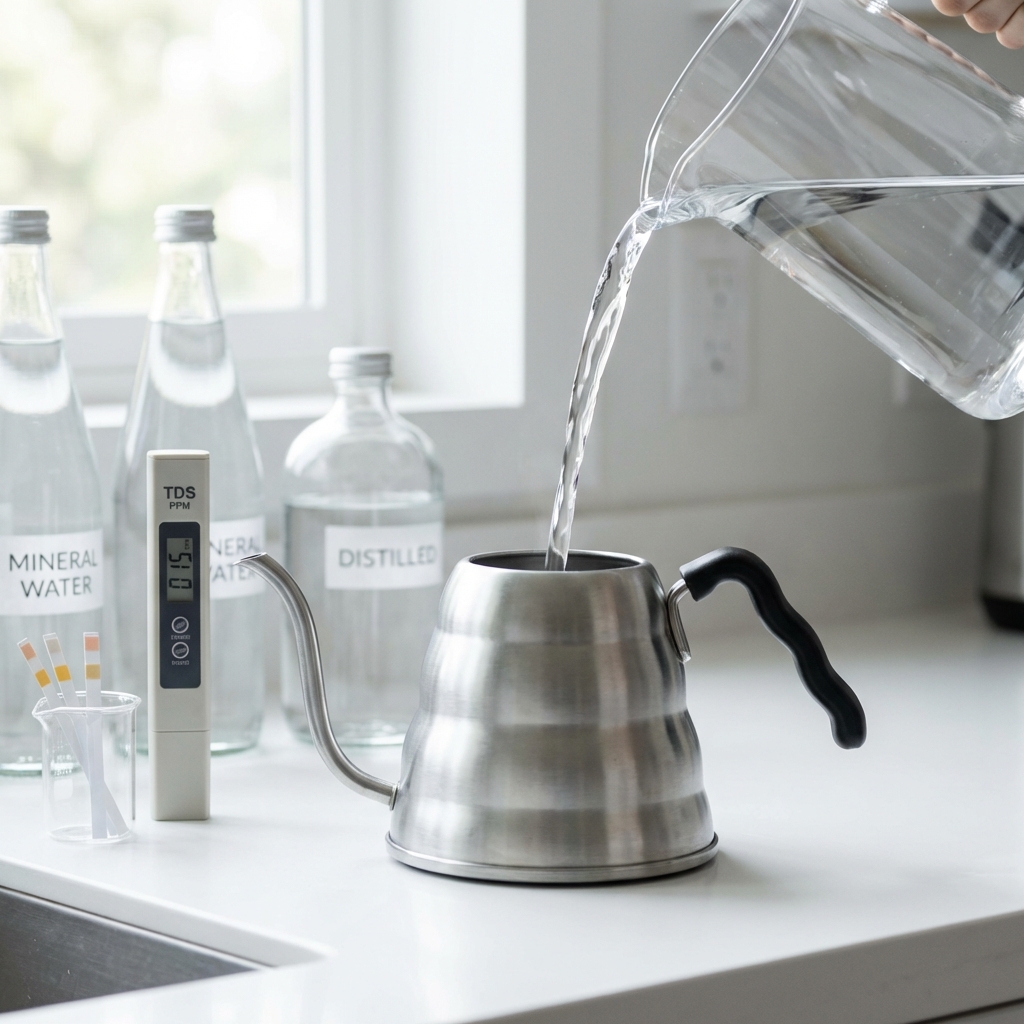
You can have the best beans, the perfect grind, and a flawless technique�but if your water isn't right, none of it matters. Coffee is 98% water, and the chemistry of that water fundamentally shapes the flavor in your cup. Let's demystify water for espresso.
What Is TDS?
Total Dissolved Solids (TDS) measures the amount of minerals, salts, and other dissolved substances in water, expressed in parts per million (ppm). A TDS meter is an inexpensive tool that gives you a quick reading of your water's mineral content.
Why Minerals Matter
Minerals in water don't just "dissolve" coffee�they actively participate in extraction through chemical bonding:
- Magnesium: Enhances extraction of bright, fruity acids. Creates perceived sweetness and clarity.
- Calcium: Contributes to body and creamy mouthfeel. Helps extract heavier, rounded flavors.
- Bicarbonate: Acts as a buffer but can mute acidity if too high. High bicarbonates flatten flavor.
The type of minerals matters as much as the total amount. Water high in magnesium will taste different than water high in calcium, even at the same TDS.
Problems with Tap Water
Most tap water is problematic for espresso:
Too Hard (High TDS)
Water above 200-300 ppm often produces:
- Chalky, flat-tasting espresso
- Muted acidity and brightness
- Limescale buildup that damages your machine
Too Soft (Low TDS)
Water below 50 ppm (including distilled water) causes:
- Under-extracted, sour, empty-tasting shots
- Lack of body and complexity
- Potential corrosion of machine internals
Chlorine and Off-Flavors
Municipal water treatments add chlorine and other chemicals that create unpleasant tastes. Even at trace levels, these can mask delicate coffee flavors.
Quick Test
Try brewing the same coffee with your tap water and with bottled water in the 100-150 ppm TDS range. The difference may surprise you.
Solutions for Better Water
1. Third Wave Water (and similar products)
These mineral sachets are added to distilled water, creating consistent, optimized brewing water. Simple, repeatable, and excellent for home use.
2. Filtered Water
A quality water filter (like BWT or specialized coffee filters) removes chlorine and reduces hardness while retaining beneficial minerals. Good balance of convenience and quality.
3. Bottled Water
Some bottled waters fall in the ideal TDS range. Check labels for mineral content. Volvic (~60 ppm) and Ashbeck (~140 ppm) are popular choices in the coffee community.
4. DIY Mineral Recipes
For the scientifically inclined, you can create custom water by adding precise amounts of magnesium sulfate and sodium bicarbonate to distilled water. Recipes are available online.
TDS of Brewed Espresso
Confusingly, TDS is also used to measure the concentration of dissolved coffee compounds in your finished espresso:
- Brewing water TDS: 75-150 ppm (parts per million)
- Espresso TDS: 8-12% (80,000-120,000 ppm)
Espresso TDS is measured with a refractometer and indicates extraction strength. Don't confuse these two uses of "TDS"!
Scale Prevention
Beyond flavor, water chemistry affects your equipment's longevity:
- Hard water causes limescale buildup in boilers and pipes
- Scale reduces heating efficiency and can clog components
- Regular descaling helps, but prevention is better
- Water filters specifically designed for espresso machines are worth the investment
Key Takeaways
- Coffee is 98% water�water quality dramatically affects taste
- Ideal brewing water TDS is 75-150 ppm
- Magnesium enhances brightness; calcium adds body
- Most tap water is either too hard or contains off-flavors
- Mineral sachets, filters, or select bottled waters are good solutions
- Good water also protects your equipment from scale