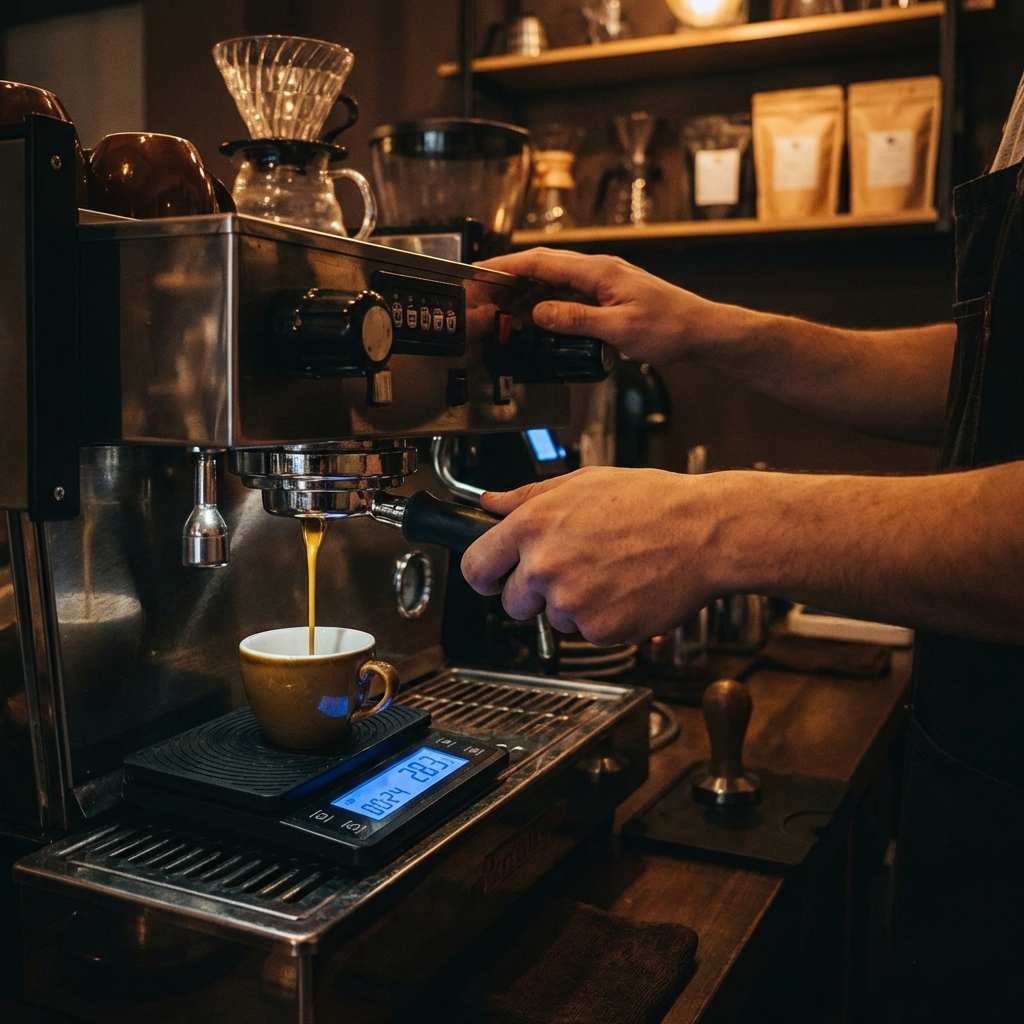
"A proper espresso should extract in 25-30 seconds." You've probably heard this rule countless times. And while it's a useful starting point, treating it as gospel can actually hurt your espresso quality. Here's why timing is more nuanced than most guides suggest.
Time Is an Outcome, Not a Target
The "25-30 second rule" became popular because it often correlates with good extraction when all other variables are reasonable. But time itself doesn't create flavor�it's merely a symptom of other factors at play.
What actually matters:
- Grind size: Controls flow rate
- Dose: Affects resistance
- Brew ratio: Determines concentration
- Water temperature: Impacts extraction rate
- Puck preparation: Influences channeling
When these variables are dialed in correctly, you might get 25-30 seconds. Or you might get 20 seconds. Or 35 seconds. The clock doesn't know what tastes good�your palate does.
When Shorter Times Work Better
There are legitimate situations where faster shots taste better:
Light Roasts
Light roasts are denser and harder to extract. Counterintuitively, faster shots at coarser grinds (turbo-style) can produce more balanced results than trying to force a 30-second extraction.
Fresh Coffee
Very fresh coffee (3-7 days off roast) outgases heavily, naturally speeding up flow. Trying to hit 30 seconds may require grinding impossibly fine.
Lower Doses
If you're using a 15g dose instead of 18g, the puck offers less resistance. A 22-second shot at this dose can be perfectly extracted.
When Longer Times Work Better
Sometimes slower is the answer:
Dark Roasts
Dark roasts are porous and extract quickly. Grinding finer and extending time to 32-35 seconds can prevent harsh, ashy flavors from dominating.
High Doses
With a 20-21g dose, more resistance means natural slow-down. A 35-second shot might be exactly what this puck needs.
Stale Coffee
Older beans (30+ days) have degassed and resist flow. A slightly longer extraction can help pull more flavor from tired beans.
The Real Rule
Use timing as a diagnostic tool, not a target. If your 20-second shot tastes perfect, don't grind finer just to hit 27 seconds. You'll only make it worse.
How to Actually Use Timing
Here's a productive relationship with your timer:
- Track your shots: Note the time for every shot you pull. This creates reference points.
- Correlate with taste: Was that 24-second shot delicious? Great�that's your target for this coffee.
- Diagnose problems: A sudden jump from 26 to 18 seconds probably means your grind shifted. Time alerts you to changes.
- Compare coffees: Different beans extract differently. Knowing that Coffee A likes 28 seconds and Coffee B likes 24 helps future dialing.
When to Start the Timer
There's debate about this. Common approaches:
- From pump activation: Most consistent, includes pre-infusion time
- From first drip: Measures only the visible extraction phase
- From reaching pressure: Relevant for machines with pre-infusion phases
The "right" answer is: pick one method and stick with it. Consistency in measurement matters more than which method you choose.
Key Takeaways
- 25-30 seconds is a guideline, not a rule
- Time is an outcome of other variables, not a cause of good flavor
- Light roasts and fresh coffee often run faster
- Dark roasts and stale coffee often run slower
- Trust your taste over your timer
- Use timing to diagnose problems and track patterns